
#112 The Hidden Brain Connection: Why Crossing the Midline is Crucial for Young Musicians

Updated: Oct 5

By Christy Hodder, Expert Music Educator
You know how sometimes you watch a child at the piano and they're doing this awkward thing where they refuse to let their left hand cross over to the right side of the keyboard? Or maybe you've noticed your violin student gets all tangled up when they try to bow across different strings? Well, there's actually a really fascinating reason behind this, and once you understand it, so many things about children and what they need to develop to have easier and successful music experiences and learning starts to make sense.
What's Really Going On in There?
So here's the thing - when children can smoothly reach across their body (like when a pianist's left hand crosses over to play those high notes, or a violinist bows easily from an E to a G string), they're showing off something called "midline crossing." And honestly, it's much cooler and more complex than it seems!
Think of your brain like a house with two rooms that need to talk to each other constantly. The corpus callosum is basically the hallway connecting those rooms - it's this thick bundle of neural fibers that lets the right and left sides of your brain chat back and forth. When kids struggle with crossing that invisible line down the middle of their body, it's often because that "hallway" is still under construction.
The Tell-Tale Signs (You've Probably Seen These!)
Piano players:
They'll twist themselves into pretzels to avoid crossing their hands
Complex pieces where both hands need to work together? So hard!
They'll use the weirdest fingering choices just to stay on "their side"
Scales that go up and down the whole keyboard make them so frustrated and they don’t want to do them.
String Players:
Their bowing can look choppy and weird
String crossings can turn into a coordination disaster
Vibrato development gets stuck
They can't seem to figure out which finger goes where when switching strings
They're always tense because they're fighting their own body
All Musicians:
Reading music from left to right is surprisingly hard
They take a long time to figure out if they're right or left-handed
They look awkward during practice (and they feel it too)
Rhythm patterns that need whole-body coordination? Very frustrating.
Here's What Can Help
For Parents (aka the home practice heroes):
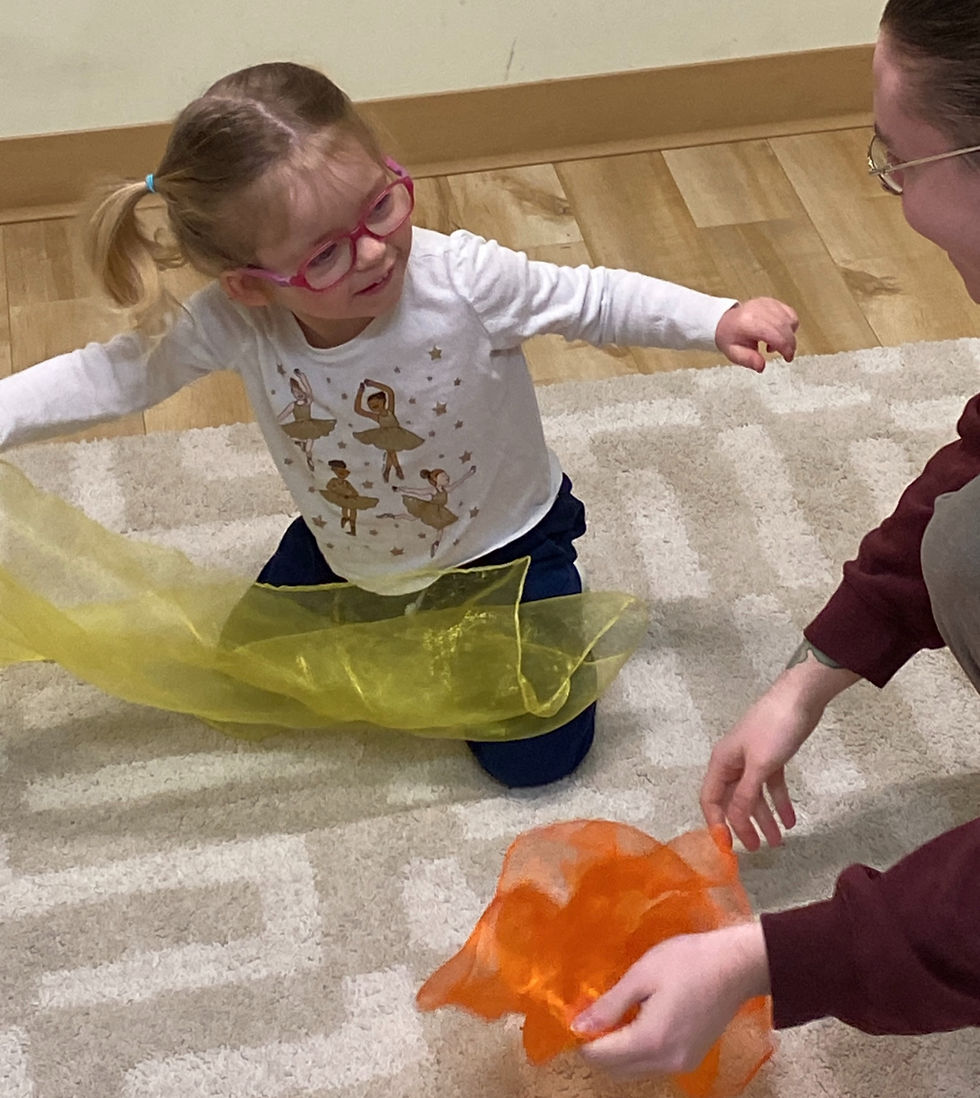
You know what's amazing? Crystal Boyack totally gets this in her Wee Violin program. Check it out. I love it! She has these incredibly fun activities that work on this stuff without kids even realizing it. Scarves, egg shakers, wooden sticks… You can start this when they're tiny age 2 or 3 and you’ll be amazed at how they develop their coordination on their instrument by doing things that are fun away from their instrument. Worth it!!! The SECE - Suzuki Early Childhood Education also has this element in class as well as a "layering on" activity to add to class for students.
Try these super simple things:
Play "Simon Says" but sneak in lots of body crossing motions
Have them draw big figure-8s in the air before sitting down to practice
March around the house with opposite arm and leg movements when they listen to one of the songs on their listening chart. (kids love this!)
Do those cross-lateral movements during a quick warm-up - or in between review/upgrade pieces trust me, it pays off big time

FREE PDF
For Teachers (you know who you are!):
Start every lesson with some kind of movement that crosses the midline. I'm talking about:
Waving scarves to the beat or a song on your listening chart or pretending to conduct with big crossing motions
Playing all the A's on the piano but only with one hand, starting high and crossing down low
Using flashcards in a way that makes them reach across their body
Visual tracking exercises (the SECE program nails this with their Duck song - kids as young as 0-3 are doing this!)
Xylophone time! Again, SECE has this built into every class, and it's brilliant
And please, please be patient with kids who struggle with coordination
The Big "Aha!" Moment
Once you understand how important crossing the midline is, you'll never look at struggling students the same way again. You’l also help your youngest students to start early developing this and that will make everything easier later! That child who seems to have no musical talent? They might just need their brain's "hallway" to finish developing. It's not about being smart or talented - it's about being developmentally ready and including this in their daily practice and weekly lessons.
When we get this, everything changes:
We stop expecting kids to do things their brains aren't ready for and help them prep first
We can give them easy exercises / activities to do by being creative in lessons and home practices.
We celebrate the coordination wins alongside the musical ones
We work with their development, bumping it up and supporting it, instead of fighting against it
Honestly, this turns practice from this awful power struggle into something where everyone's on the same team, helping the kid grow in all kinds of ways through music.
Making It Work in Real Life
Look, instead of obsessing over whether they're hitting the right notes, think about how each practice session can help their whole brain develop. It's actually pretty fun when you think about it this way!
Try things like:
Clapping rhythms while marching around, eventually hands can do one rhythm and feet different!
Drawing musical symbols, spell messages, make simple pictures or shapes in the air (children love this)
Playing simple percussion with alternating hands- again love that SECE class works on this regularly in a fun way with songs you sing in your daily routines with your 0-3 year olds.
Conducting along to their favorite songs while they listen. Open your shoulder joint to conduct to the right and cross your body to conduct the beat to the left for example. Children love bouncing a scarf to the beat of a song fast and slow….outting on music and dancing with a scarf with a parent is also a bonding experience. Take turns being in charge of the next movement.
Play with a set of bells or boom wackers and the child stays stationary and reaches across their body to play the lower tones.
All of this is building those neural pathways that make music easier AND help with coordination in general. It's like you're giving them a foundation that'll serve them for life.
Something FUN!
At our summer camp we focused on traditional music and culture from Yukon & Canadas NORTH. It was so fun! We did a traditional song that was also a competition dance between a child and a mother. It had lots of midline crossing and all ages LOVED it from young to teens, parents and grandparents!
Here is a fun video for you to watch and see the midline crossing and laughs... we practiced this all week for doing with the parents concert on Friday and it was such a HIT!!!
FREE PDF
The Bottom Line
The next time you see a child struggling with something that seems like it should be simple, remember the midline crossing - hallway between the two rooms analogy. Maybe they're not being difficult or tired - maybe their brain is just still building those important connections. And the amaizng thing is, music practice can actually help speed that process along when - we know what we're doing and include lots of cross body practicing in between our playing bits in lessons and at home.
Pretty amazing how much is happening behind the scenes, right?
There are so many ideas - what are your favourite ones?
Want More Support?
Free Checklist: Download my "Checklist for Successful Music Practice" – your simple guide to organizing effective and enjoyable practice sessions, whether you're a new practice parent or a seasoned one.
Practicing Pro Academy: For families ready to dive deeper, my comprehensive digital course offers step-by-step guidance to create more effective, positive, and fun home practices. This once-yearly course includes personal support from me and a special package delivered to your door. Join the waitlist to be notified when registration opens.
Learn more about PPA and join the waitlist HERE for the next Practicing Pro Academy course. It's only offered once a year so you don't want to miss it. The registration will only open for a few weeks and I'll let everyone on the waitlist know immediately so that you can grab one of the spots.
LIKE, FOLLOW, and SHARE on Instagram and/or Facebook to be inspired and join the positive practicing music community.
Facebook: Practicing Pro
Instagram: @practicingpro


